Microsoft Office 365 Cloud Providers: What to Consider
-
 03 December 2025
 Microsoft 365,Office 365
-
 Written by
Editorial Team
Written by
Editorial Team
Microsoft 365 has become a cornerstone of workplace productivity for more than 800,000 businesses across the United States, and with good reason. It combines familiar applications with powerful cloud capabilities, offering a practical way for companies to modernize operations without compromising usability or performance.
One of its strongest advantages is how easily it simplifies daily work. Employees can access files from any location, collaborate on documents in real time, and benefit from automatic updates that require no manual effort. Built-in security features and centralized user management only strengthen its appeal, making the shift an obvious choice for many organizations.
However, adopting Microsoft 365 involves more than just subscribing to the service. A reliable cloud provider is essential to ensure the transition is smooth, secure, and tailored to your business goals. From license management to data migration, the provider you choose will directly shape your Microsoft 365 experience.
This guide will help you identify the key qualities to look for in a Microsoft 365 cloud provider, giving you the clarity and confidence to move forward successfully.
Making Sense of the Microsoft CSP Model for Microsoft 365
The Microsoft Cloud Solution Provider (CSP) program gives businesses a streamlined way to manage their Microsoft 365 services through a trusted partner. Instead of navigating everything alone, you work with a certified provider who handles licensing, setup, scaling, and ongoing support.
CSPs offer flexible billing options, allowing monthly or annual plans that can be adjusted as your business grows. This ensures you’re only paying for what you need, with the ability to scale up or down as required.
Beyond billing and provisioning, a CSP helps align Microsoft 365 with your day-to-day operations. From environment configuration to user support, they act as a hands-on resource, making it easier to maintain control and keep things running smoothly.
For companies that want more control, flexibility, and expert guidance, choosing a Microsoft CSP is a smart way to get more out of Microsoft 365.
The Practical Advantages of Choosing a Microsoft 365 Cloud Partner
Working with a Microsoft 365 cloud provider offers more than just access to licenses. It gives businesses a more efficient way to manage their Microsoft environment while freeing up internal resources to focus on what matters most. Whether you’re a growing organization or simply looking to optimize your IT operations, the right provider can deliver tangible value through practical support and scalable service options.
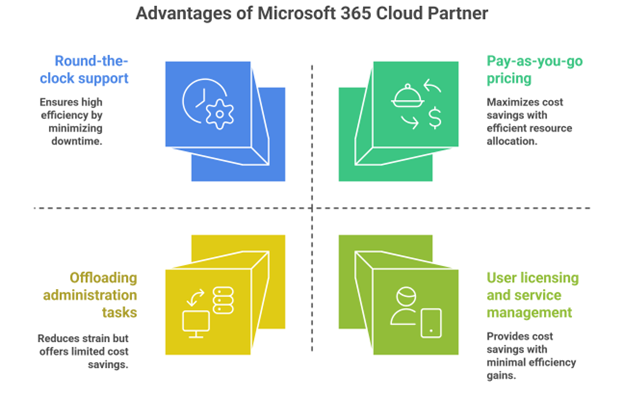
Here are some of the key advantages of relying on a dedicated Microsoft 365 cloud provider:
- Pay-as-you-go pricing lets you choose monthly or annual plans, so you’re only billed for what you need, with no binding contracts.
- Round-the-clock support ensures quick resolution of issues, minimizing downtime and keeping teams productive.
- Offloading administration tasks like setup, updates, and maintenance reduces strain on internal IT and cuts overall costs.
- Providers take care of user licensing and service management, giving your team more time to concentrate on strategic initiatives.
Key Criteria for Choosing the Right Microsoft 365 Cloud Provider
Cloud providers can vary widely in the quality and scope of services they offer for Microsoft 365. Choosing the right one involves more than just looking at pricing. It requires a closer look at their reliability, security standards, technical strengths, and how well they understand your business requirements. The points below outline the key factors to consider when selecting a provider that can support your long-term goals and ensure a stable, efficient cloud experience.
-
Assessing Business Stability and Strategic Compatibility
The right Microsoft 365 provider should offer more than just technical support. Their ability to align with your business goals and operate reliably over time plays a major role in the success of your cloud journey. Here are key qualities to look for:
- Verified compliance through third-party audits helps confirm that data protection and regulatory standards are being met.
- Providers with a working knowledge of your industry and objectives are better equipped to tailor services to your needs.
- Clear governance structures, risk policies, and vendor evaluation processes reflect operational maturity.
- A strong financial position ensures the provider can continue delivering services without risk of disruption.
- A solid reputation, backed by customer references and recognized partnerships, signals reliability.
-
Evaluating Administrative and Operational Reliability
A dependable Microsoft 365 provider should offer tools and support systems that keep your environment running smoothly and transparently. These operational safeguards help maintain service quality and prevent surprises.
- Well-defined Service Level Agreements (SLAs) outline minimum performance and availability expectations.
- Usage and performance reports allow you to monitor reliability and track whether commitments are being met.
- Resource monitoring and configuration management tools help track changes and ensure system stability.
- Transparent billing with automated tracking gives you full visibility into costs and prevents unexpected charges.
-
Assessing Technical Readiness and Flexibility
The technical foundation of your Microsoft 365 provider plays a major role in how effectively your services perform and evolve over time. A strong infrastructure ensures minimal friction during deployment and leaves room for future scalability.
- Streamlined tools for deployment, updates, and ongoing management help reduce downtime and simplify administration.
- Support for standard APIs and interfaces makes it easier to integrate Microsoft 365 with your existing tools and workflows.
- Built-in event monitoring ensures issues are detected quickly and addressed before they impact users.
- Change management practices should include proper logging, testing, and approvals to keep systems secure and stable.
- Availability of hybrid cloud options offers added flexibility if your business needs shift later on.
-
Reviewing Security Standards and Data Protection Measures
A provider’s security framework should be built to protect data at every level—from access controls to physical safeguards. Before making a choice, ensure the provider follows strict protocols that minimize risk and support ongoing resilience.
- Security policies must clearly define how access is managed across both provider and client environments.
- Identity controls should be role-based, with mandatory authentication for all changes made to systems or data.
- Reliable data backup and retention plans are critical to safeguard email, files, and account configurations.
- Data centers should be protected by physical security layers and have contingency plans for disaster recovery.
- The provider’s infrastructure must be designed to withstand evolving cyber threats across all cloud service layers.
Making the Right Choice for Long-Term Success
Choosing a Microsoft 365 cloud provider is a decision that can shape the way your organization works, protects its data, and prepares for future growth. The provider you select should not only offer technical support but also bring long-term reliability, security, and a clear understanding of your business goals.
Apps4Rent is a Microsoft Solutions Partner that offers Office 365 plans backed by expert guidance and responsive support. Our team helps businesses migrate, manage, and optimize Microsoft 365 environments with minimal disruption and maximum value.
With the right provider, Microsoft 365 becomes a dependable foundation for daily operations and long-term success. Apps4Rent is ready to help you move forward with confidence. Reach out to us today over chat, call, or email to learn more.